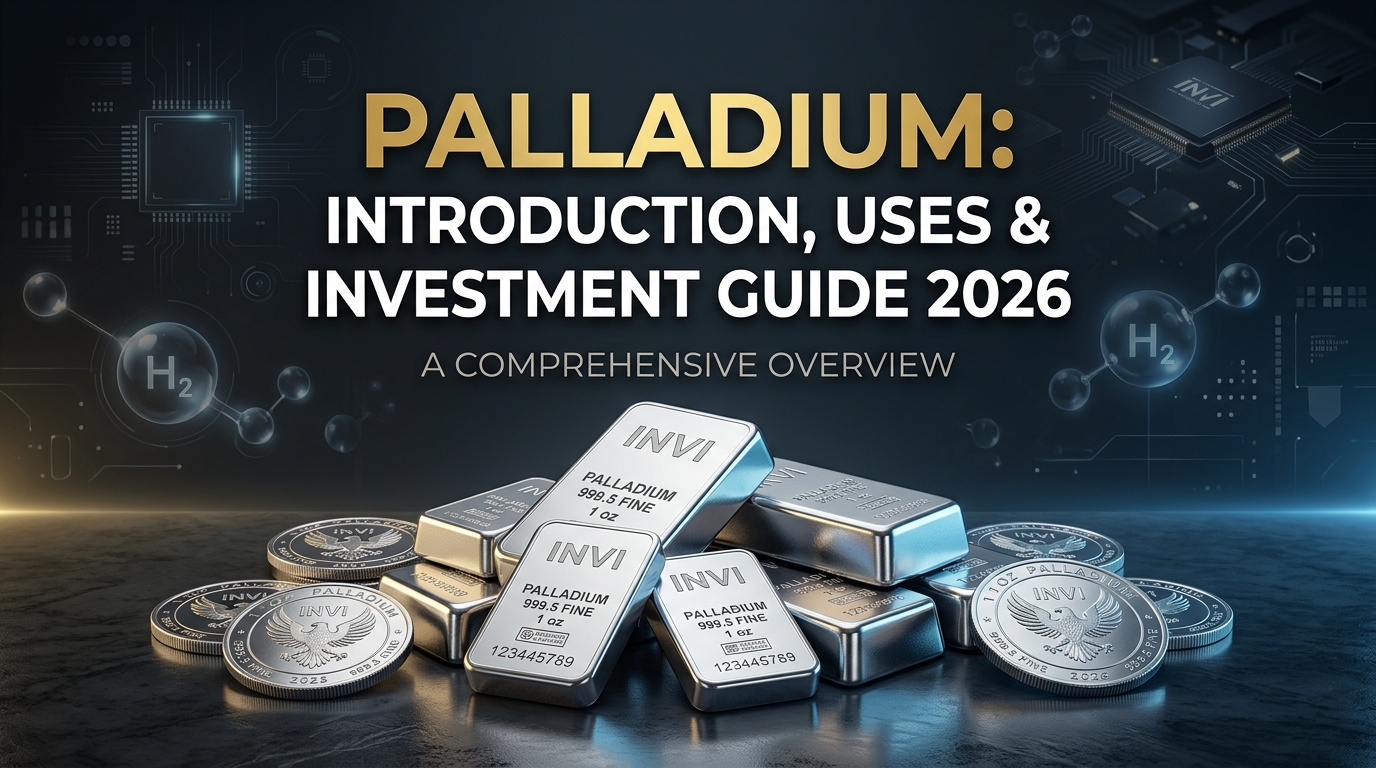
Palladium is one of the most fascinating and valuable members of the platinum group metals (PGMs). With its silvery-white appearance, exceptional catalytic properties, and growing importance in green technology, palladium has emerged as a critical metal in both industrial applications and investment portfolios. While many investors are familiar with gold and silver, palladium offers a compelling alternative for diversification in the precious metals sector.
In this comprehensive guide, we explore the history, unique characteristics, major applications, market dynamics, and investment potential of palladium — with practical insights for those considering it as part of a modern precious metals strategy.
What Is Palladium?
Palladium is a chemical element with the symbol Pd and atomic number 46. It belongs to the platinum group metals, which also include platinum, rhodium, ruthenium, iridium, and osmium. Discovered in 1803 by English chemist William Hyde Wollaston, palladium was named after the asteroid Pallas, which itself was named after the Greek goddess of wisdom.
Physically, palladium is a soft, ductile, and malleable metal that resembles platinum but is lighter and less dense. One of its most remarkable properties is its ability to absorb hydrogen gas — up to 900 times its own volume — making it exceptionally useful in chemical reactions and industrial processes.
Historical Background of Palladium
Unlike gold and silver, which have been used for thousands of years in currency and jewelry, palladium is a relatively “young” precious metal in human history. Its commercial significance only became prominent in the 20th century with the rise of the automotive industry.
The metal gained major economic importance in the 1970s when stricter environmental regulations in the United States and Europe required catalytic converters in vehicles to reduce harmful emissions. This single application transformed palladium from a niche metal into a strategic industrial resource. Today, palladium’s price can be more volatile than gold due to its concentrated industrial demand.
Key Properties That Make Palladium Special
- Catalytic Ability: Palladium is an outstanding catalyst, accelerating chemical reactions without being consumed.
- Hydrogen Absorption: It can absorb large amounts of hydrogen at room temperature, useful in purification and storage technologies.
- Corrosion Resistance: Highly resistant to oxidation and corrosion.
- High Melting Point: Melts at approximately 1,555°C (2,831°F).
- Electrical Conductivity: Excellent conductor used in electronics.
- Alloy Formation: Easily forms alloys with other metals to enhance strength and durability.
These properties position palladium as more than just an investment metal — it is a critical material for modern technology and environmental solutions.
Major Industrial Applications of Palladium
1. Automotive Catalytic Converters More than 80% of global palladium demand comes from the automotive sector. Palladium is the primary metal used in catalytic converters to transform harmful exhaust gases into less toxic substances.
2. Electronics and Technology Palladium is widely used in multilayer ceramic capacitors (MLCCs) found in smartphones, laptops, and other consumer electronics. It also appears in hard disks, connectors, and soldering materials.
3. Hydrogen Energy and Fuel Cells As the world moves toward a hydrogen economy, palladium plays a vital role in hydrogen purification, storage, and fuel cell technology. sign in invi we application
4. Jewelry and Dentistry Palladium is used in white gold alloys and dental restorations. It provides a bright, tarnish-resistant finish.
5. Chemical Industry Palladium catalysts are essential in pharmaceutical manufacturing and various industrial chemical processes.
6. Emerging Applications Water purification, sensors, aerospace components, and sustainable chemistry.
Palladium as an Investment Asset
Palladium has delivered impressive returns in certain periods. Investors can access it through physical bars, ETFs, mining stocks, or futures. It offers strong diversification potential due to its unique demand drivers.
Advantages: High industrial demand, limited supply, growth from green technologies. Risks: Price volatility, geopolitical supply risks, economic cycles.
Palladium Market Dynamics and Future Outlook
The palladium market is smaller than gold, with concentrated supply from Russia and South Africa. Demand is driven by automotive production, emission standards, and the hydrogen economy. Platforms like INVI provide convenient ways for investors to participate in the precious metals market, including exposure to PGMs.
Palladium represents both an industrial powerhouse and an attractive investment opportunity in the evolving global economy.
INVI Frequently Asked Questions (FAQ)
1. What is palladium mainly used for? Palladium is primarily used in automotive catalytic converters, electronics, hydrogen technologies, jewelry, and chemical manufacturing.
2. Is palladium a good investment compared to gold? Palladium offers higher growth potential but with more volatility. It is excellent for portfolio diversification alongside gold and silver.
3. How can beginners invest in palladium? Beginners can start with palladium ETFs, physical bars through trusted platforms, or mining company stocks after proper research.
4. What factors influence palladium prices the most? Automotive industry demand, emission regulations, supply from major producers (Russia & South Africa), and developments in hydrogen energy.